In Judaism, Eikhah, or the Book of Lamentations, is recited on Tisha B’Av (the 9th of the month of Av, which usually falls in mid-to late July), the solemn holiday that marks the destruction of not one, but the two great temples in Jerusalem. Talk about bad luck.
Bad luck is not usually a theme one wants to entertain at the beginning of a new year, but, be relieved, bad luck is not what is at stake here. Lamentations is at issue: my lamenting over the temporary loss—even the intangibility—of the garden.
During these times I find I most need the space of the garden, the outlet, the alternative activity that provides a room to contemplate undisturbed while working the soil with my bare fingers, or to feel nothing but the presence of a nature that is only marginally under my influence, or to recognize that I do something—something else that provides rewards of a different sort.
Snow for a time covered the moribund brown that has descended upon this mid-Atlantic earth and provided a more appealing ubiquity, even as it reminded us of being entrapped (always temporarily) in winter’s snare. But several warm days and a period of rain removed all but two minor mounds of snow in my garden, and we look out again at blanched greens and at brown, the color we usually love, but the one color that, during winter, mocks itself.
Now, we may lament, and we may feel sorrow, and we may feel the longing. And, to stave off the sadness, we may sift through the plant and seed catalogues and be seduced by the sale prices and the proliferation of color. (Yes, dear reader, I have my Spring Hill sale catalogue and a packet of “desires” sitting to my right: Hosta Tokudama and Voodoo Lily, White Christmas Rose Hellebore for my late winter garden and Toad Lily for autumn color, and Wintergreen groundcover with its edible red berries, among so many others.)
But we must also recall, like the Book of Lamentations, that even in our sorrows we must recognize and nurture the seeds of hope. The Book, it is presumed, was written by survivors of the respective destructions and attempted annihilations of peoples. Of course the book reflects their sorrows and their angers, their hatreds and their traumas. But the book was written by survivors.
So I take heed and apply the lesson to the garden in winter. We survive, and to take the pain out of the months in which the garden is nearly intangible, we must plan accordingly. For all of us small space gardeners, we haven’t the luxury of planting large winter-interest bushes or blooming witch-hazels, and so we must be more inventive, more creative, in our approach.
Wintergreen is a lovely ground cover for the shade that provides year-round interest. Its pinkish flowers in the spring give way to delightfully red berries in the autumn which, apparently, songbirds love. I haven’t Wintergreen in my garden but it is surely on my must-have list.
What I do have provides a modicum of hope for the upcoming garden season.
Sawtooth Aucuba japonica Serratifolia (Serrated Japanese Laurel), offering springtime promise in the guise of lime green new growth tips,

and Holly Fern which, though a bit trampled by the snow-pack (and the workmen at my house), offers robust and lovely contrast against the browned landscape,

and the Autumn Fern, which is fetching against a backdrop of the dried remnants of the Nikko Blue Hydrangea,

and Firepower Nandina which, in contrast to its Nandina domestica cousin, does not offer bright red berries, but bright red (or scarlet) foliage throughout the winter,


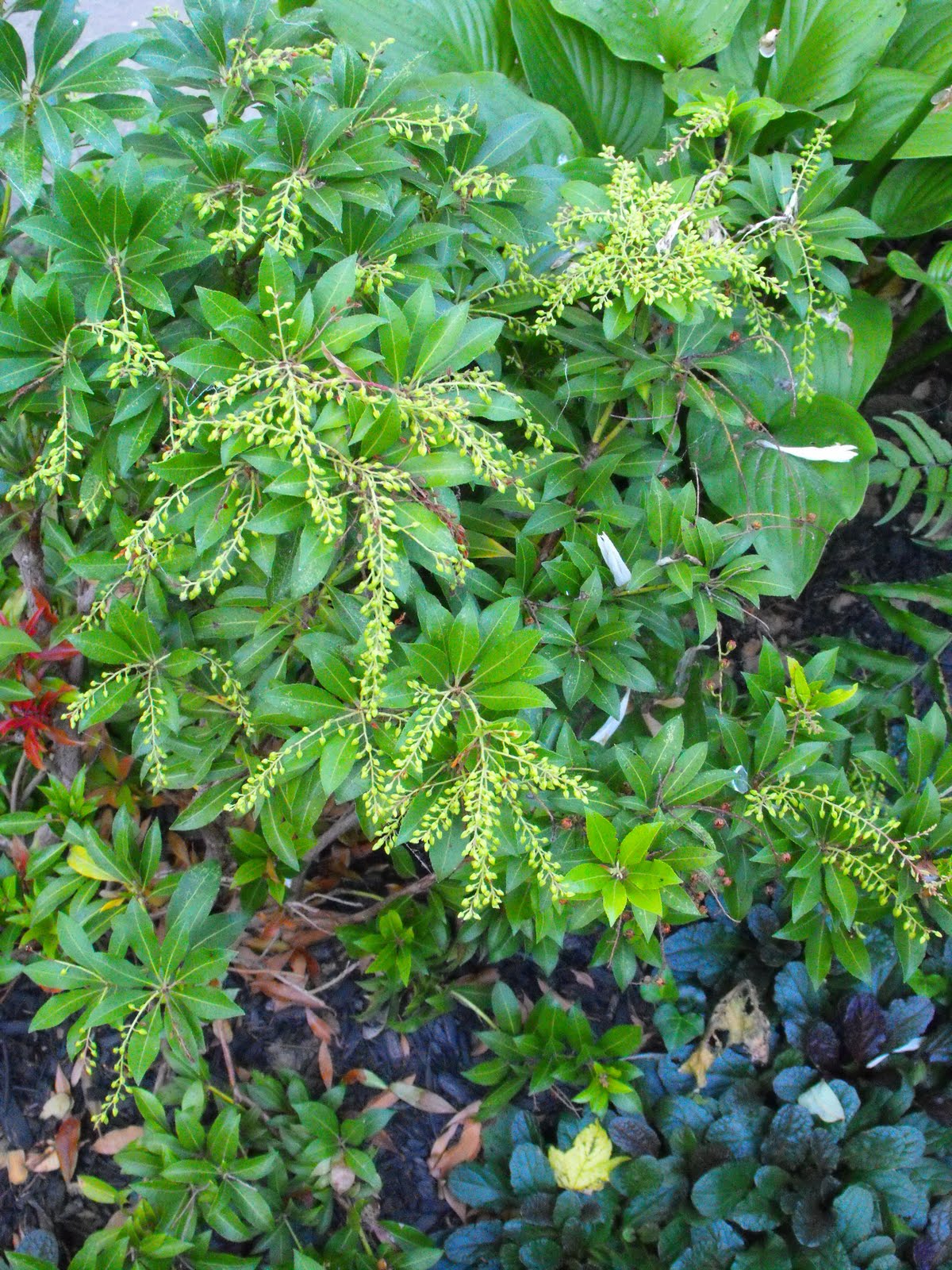
and Pieris japonica, whose tendrils of flower buds cannot help but elicit a smile, and an upwelling of hope and heightened anticipation,

and, finally, in the front sun garden, Euphorbia x martini Rudolph Waleuphrud which, honestly, sported very red tips yesterday but today must have donned a more sullen posture in the midst of an impending snowstorm.

So, fellow gardeners, this is our quest: to find more winter-interest plants which move beyond the conifers, and to situate them in the garden in all of the right places--which is to say in our line of vision through windows. Why? Because when we begin to lament and wail, we simply move our fattening bodies to the window and witness that life does continue, hope remains, and soon we shall be as dirty as some of my thoughts as expressed in this blog.