Friday, July 22, 2011

My Filibuster, My Swiss, My Garden

41: the number of Senators needed to permit use of the Filibuster

41: the international dialing code for Switzerland

41: George W. Bush's nickname for his father, George H.W., the 41st President of the United States


41: Montana, as in the 41st U.S. state

41: the year Caligula was assassinated

41 (B.C.E.): the beginning of the Marc Antony - Cleopatra alliance (and their fabled love affair!)

41: cuarenta y uno, Mexican slang for "homosexuals" stemming from a scandal dubbed El baile de los cuarenta y uno (the Dance of the 41),  in reference to a 1901 raid on a private house which resulted in the arrest of 41 high society gays, and the ensuing efforts of the Porfirio Diaz government to cover-up the affair

41: the Jupiter Symphony, Mozart's last (only because he skipped the number 37)

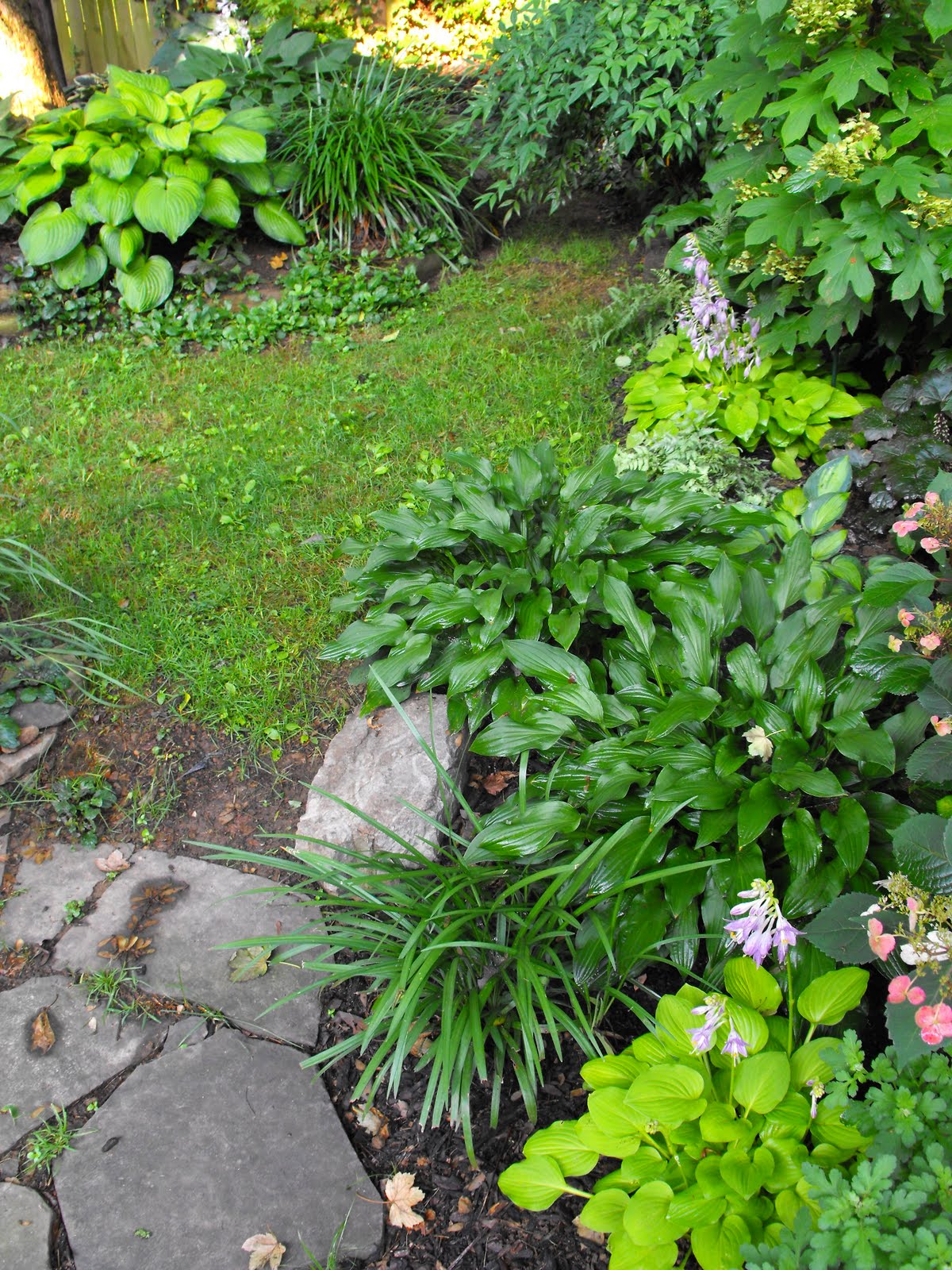
41: the number of distinct genera of plants in my rear shade garden (to be clear, I count 80 species of 41 different genera in the rear shade garden)


41: a measure of time, not always an arbitrary number; both a singularity and a component in an infinite sequence

Time passes: neither can we deny or stop it. "Time," Heidegger mused, "is the truth of space." Space, therefore, is ontologically prior to time, and to understand time, we must understand space.

Yet, on my reading of his formulation, the only way we may understand space is through time. The two are inextricably linked. This is not to suggest a conception of space as linearity, but in a sense it is. While Life (with a capital L, a designation of the phenomenon) may be adequately denoted as a cycle (of birth, maturation, decline, and death), life as an individual phenomenon itself manifests the cycle but it cannot be renewed. Individual life is finite, and therefore linear.

Take any number: it is, in its singularity, both a beginning and an end. Set sequentially, though, it becomes a fleeting moment, a link to that which precedes and that which proceeds it. Both understandings ultimately get at why age is so significant: we are simultaneously linked and de-linked to a world beyond. Our individuality is inherently determined by our own acts of self-creation (and, to be a bit Hegelian, self-negation), but also by our sheer connectedness to a broader universe. We are Time and we are time, we are Life, and we are life.


The garden exemplifies this movement of the truth of space. Our plants become our selves, and our selves become enmeshed in a horticultural assemblage, a kingdom beyond our control but always connected to us.

That is why I take so many photographs of the garden. Every morning, every afternoon, every moment of time: each offers something new, whether in the opening of a blossom, the fading of a color, the growth of a stem, the appearance of a leaf. We may deem these insignificant moments, or moments to be fully appreciated on the weekend. But these almost inappreciable moments obtain significance, for, taken together, they become the pedagogy of the garden: it teaches us to be in the world, it envelops us in space. And always it makes us appreciate the passage of time, even as time for a brief moment, stands still.

 
The garden: it is my filibuster, it is my Switzerland, it is now, for this moment anyway, my 41.


Wednesday, July 20, 2011

Abuzz with Activity

The summer garden is abuzz with activity:

Bees gather nectar, looking quite smashing against the Gallo Yellow Gaillardia,

buds open, in some cases a bit prematurely such as the Kirengeshoma palmata (Yellow Waxbells), not due for its display until late August and September,


or "as scheduled," as with Guacamole Hosta,


and the June Plantain hosta, which still struggles after another bout of that nasty, dreadful, feared Sclerota Rolfsii;


some flowers, though, fade, pre-programmed as it were to understand that there is a moment to shine, and there are times to let others shine,


all the while Gramsci-cat lounges in not yet scorching morning sun,


and Praying Mantises--of which I have an abundance in the front garden--eat morning meals, perched attractively atop vibrant Crocosmia,


while others wait patiently for prey.

But something else buzzes, dear reader: YOU!

My readership increased to an astonishing 576 last month, and though I have no way of knowing if that translates into 576 different readers, or 576 hits for the eight different entries, I am utterly touched, flattered, and emboldened that others would care to read my musings, and occasional dirty thought.

Thank you, thank you, thank you dear readers!!

Now, if only I could conjure a little more dirty....

Tuesday, July 19, 2011

My Pharos, My Beacon

From seemingly time immemorial, we humans have relied on various artifices to help navigate our way in the world, whether literally or metaphorically.

For the physical journey, lighthouses dot the coasts, punctuating darkness with astonishing flare. On land, that ubiquitous green sign dominates our street-scapes and highways.

Talismans of varying sort--rabbit feet, mezuzot, prayer beads, omamori, nazars--keep us safe, ward off evil, bring us health. Scripts, scriptures, sutras, discourses, gospels, hymns, tantras, Vedas, Bibles, Torahs, Korans, Nikayas, and Angas  provide a different kind of navigation for a journey much more intimate, sacred, and personal than many dare admit. That journey is hardly accomplished once a week in a crowded (or, given contemporary proclivities, not so crowded) room with others. Rather, that journey begins each day when we look into the mirror and stare back at the shell and the history and the life and the being that look back at us. And that journey continues each moment in our interactions with others, and is paved or pitted with every gesture or act or engagement in the world. 


We need, in other words, guidance to face the Supreme Mystery. This mystery is not the Divine. No. It is Life.

Life itself is our Supreme Mystery. Each of us must in our unique ways reconcile the Being we inhabit with the world around us. How are we to live is the question that we think all of the talismans, amulets, and sacred texts ultimately answer. 

Sometimes, though, the answer to that question is much more pressing, much more momentary, and actually morphs into another related question: how am I to get through?

This summer has been one of obligations too numerable to think about, and, worse, the production of sub-standard work that has required additional time and labor to rectify my shortcomings. And so I find myself with little time to garden (or blog, hence the paucity of entries of late), and I feel all the worse for it.

Early yesterday morning--ahead of a very busy day--I ventured outside to feed Miss Grey Kitty, and there was my Pharos, my beacon: Rose Mallow. She offered me her first bloom of the season on a day I needed it most.

We do find our amulets in unexpected places. We simply need to be attuned to them, and to know and trust ourselves to intuit and accept the messages they communicate to us.

 
In this case, stopping to smell the proverbial rose (proverbial indeed: Rose Mallow is only in name a rose, and is rather in the Hibiscus family!) proved my amulet, my talisman, my moment to stop spinning wheels and engage in that which revives me: gardening.


Sunday, July 17, 2011

Adult (Dis)pleasures XI: Judging

We all judge. Every day we judge.


We judge others for what they say, what they wear, what they do.  Sometimes our judgments are constructive ("the evidence you provide for this argument is thin, but if you reframe the argument the evidence becomes much more powerful"). Sometimes our judgments are innocuous ("compared to the sprightliness of Prague, I must say I don't like Vienna....it's too cold and austere of a city though I'd still go back"). Other times, our judgments are just plain catty ("can you believe X wore that hideous dress/shirt/tie/suit/etc.?!").

The field of judgment has been vastly expanded by technology, and its social media offspring like Facebook (or, perhaps more appropriately stated, the opportunities and the publicity of our varied judgments have multiplied, not necessarily the act of judgment itself). Facebook, I've noticed, permits all of us to be hedonists and voyeurs: roles that no doubt both attract the judgment of others and encourage our own forays into what can be, depending on how articulated, an unbecoming activity.

Last Saturday, I opened my garden to judgment by unknown others. I thought it would be an exercise in anxiety, but it turned out to be rather innocuous and actually somewhat enjoyable. The City Garden Competition, sponsored by the Delaware Center for Horticulture and supported by the DuPont Company, celebrates the art of city gardening and rewards those who try to beautify the city.

But beauty is, as the proverb goes, in the eye of the beholder. And so some may scoff at your perennial-dominated garden because it "lacks color." Others may condescend at your "organic, pedestrian" attempt to "garden" because it fails to cohere with one's particular image of a garden--usually, in that case, a professionally installed Italianate garden rich in sculpted topiary and statuary, or French geometric patterned, delineated beds in a vast sea of garden space that can only exude wealth.

Yet the hope is that collections of judges, multiples of them, can agree on what constitutes beauty in the garden even if one clearly bemoans a lack of color provided by an infusion of annuals.  In that regard, we might say proper judgment, as well as conceptions of beauty, are at root connected to principles and the application of them to specific circumstances.

And so the judges on that hot, but unusually not humid, July morning, underscored the difference between judgment as cattiness and judgment as serious, principled endeavor: they asked questions. If at first glance the sun garden at 410 looks in the summer like a mass of foliage, punctuated only occasionally by a flower, and thus uninteresting, questions provoked my exegesis on design, about which I've already blogged.

The "interrogation" (by which I mean no normative judgment, just a description of the questioning that took place that day) in the end made my entry into the City Garden Competition all worth it. It frankly makes no difference to me whether or not I win. What really mattered was the sharing of my garden experience with others, and their genuine concern (at least on a professional level in those particular moments of judging) with design principles, aesthetics,and the joy of gardening in all its forms.

I hope you enjoy these photos taken on the morning of the contest (after, I might add, an evening of intense thunderstorms and heavy rain that lasted several hours).

The Blue Fescue Grass provides a nice counterpoint to the vibrancy of Crocosmia, though some may think the juxtaposition is garish. 


The East Side Shade Bed begins with the alacrity of Orange Marmalade Hosta paired with the coolness of the Sawtooth Aucuba, both of which anticipate colors and hues that appear throughout the rear shade gardens.


Though her margins have faded as the summer progresses (as all hosta colors invariably do), the Golden Tiarra Hosta looks smashing after a cleansing rain.


I now have two Lemon Drop Hostas to create an "echo" effect or what garden designers call rhythm.

Taking a broader view, the Lemon Drop hosta picks up on the avocado green of the Guacamole Hosta.


On the other side of the rear shade garden, the Nikko Blue Hydrangea has now faded, as have the vibrant gold margins of Aureomarginata Hosta. But they still offer a sense of beauty that comes with the patina of aging.


The Christmas Eve Hosta in front of the Buddha usually does not fare well in exceptional summer heat, so I think I need to make an offering to the Buddha for helping it flourish this season.

Saturday, June 25, 2011

Color in the Garden: A Bit of Provence

In the world of color, we humans are Pavlovian dogs. Art, psychology, marketing: all (among others) have considered seriously the implications of color in our lives, and the responses colors trigger. Take blue and white for example. For some, the combination conjures images of Delft ware; for others, Chinese porcelain. In certain contexts, blue and white evoke the rhapsody of the Greek, while in others they exude the cool serenity of a summer beach house.

If there is an iconic color combination that says "Provence," then (in my estimation) it is blue and yellow (or shades of purple and yellow). How do I intuit this? I have not been to Provence. I do not know Provence. I will be in France this summer. Provence is not, unfortunately, on my itinerary. Yet such is the power of popular culture on individual imagination in that it supplies us with facets of a life, images of a scene.

There are books on Provence, and images to be found using Google, and those table cloths sold at perhaps nearly every street fair in America to help us construct multiple Provences. Each sells an image of Provence. And each sale (I use the term loosely, even metaphorically), creates an expectation. Perhaps that is why so many feel tinges of disappointment when visiting the reality of that which had hitherto been an image: it fails to accord with our imaginations.

When designing gardens, some employ particular colors to evoke particular moods: pink for romance, orange for boldness,white for ethereality.


I've always appreciated the combination of blue and yellow--not because I wish to fabricate an approximation of a place I have not visited, but because vivacious yellow is tempered by cerebral blue, while meditative blue is enlivened by blithesome yellow.

Color need not always come from flowers. {Side story: At afternoon tea on Thursday, tea-house matron Judy and I chatted wildly away about gardening and flowers and cats and other such things, and in the course of conversation the issue of annuals came up. Suddenly, the "g" word passed from my lips. Yes. Right in front of a woman gardener of a certain age. Garish.

I scanned her face for a look of horror, when she burst out with laughter and whole-heartedly agreed with me: "Yes, garish! Oh Yes! That's exactly what they are!"

Now, let me put that in context. For the perennial gardener, the annual placed here and there to "fill space" might will look garish especially if little else is in bloom, as will gardens comprised solely of annuals  (which is not, it seems to me, gardening--SNOB ALERTS ARE BACK!--but "dressing up" space, filling it...it just isn't gardening. Not in my view. But who am I to adjudge the act of gardening?!}

In any case, color can come from foliage, and I design my gardens around the juxtaposition of foliage textures and color variations, though of course with an eye always to the color of the perennial flower and its respective bloom time. The effect is subtle; perhaps sublime, but certainly more subtle than using flowers.

My yellow and blue combinations are varied, the effect always the same. As I wrote in a previous entry, "if blue anchors the sky in the garden, yellow anchors the sun."

Sometimes, flowers do the work for us, as with the Columbine and Spiderwort:


Other times, blue and yellow (or variations thereof) appear without planning or foresight, as with these pale purple bearded irises that were mixed with the yellows:


The recent planting of the Gaillardia Gallo Yellow near the Tall Purpletop Verbena was deliberate (it is also appears against a backdrop of lavender,which is planted in the second tier of the front sun garden);


But sometimes I have no idea where to situate a plant, such as this Citronelle Heuchera villosa, as it looks good against a backdrop of Cobalt Blue Bearded Iris blades (it really pulls out the bluish-grey hue),


and against the Nikko Blue Hydrangea,

and, of course, against Miss Grey Kitty (though she looks smashing with everything!)


 In the end, I placed the Citronelle Heuchera next to the (cobalt blue) bearded irises; the effect is more subtle and, I think, more sublime. Miss Grey Kitty agrees.

Wednesday, June 22, 2011

The Devil Wears Red...and Really Well I might Add

Who cannot but relish Meryl Streep's steely portrayal of the ‘holds-sway-over-life-and-death’ fashionista Miranda in The Devil Wears Prada?! If in that film she spoke in that lock-jawed (yet always whispering), aristocratic kind of way, in others she has donned Polish, Irish, Irish-American, Upper Midwest, Danish, Bronx, Australian, British, Italian, Android, and French accents (The Many Voices of Meryl Streep). Her mannerisms, I would argue, are just as iconic. And so Streep has come to occupy a peculiar place in popular culture: The New York Times even dubbed her performances as “that unmistakable Streepness.” If in France, actresses (think Catherine Deneuve, Juliette Binoche, Audrey Tautou and the departed Brigitte Bardot and Sarah Bernhardt) are regarded “as something between natural resources and national treasures,” here in the US actresses “tend to be idols, commodities, or fetish objects.” Streep, though, may just have ascended beyond the altar.

In any case, in these economic times, it is doubtful the Devil can afford Prada, but no doubt the Devil continues to wear red.

I’ve seen it.

Yes.

In my garden.

Lucifer.

Crocosmia Lucifer to be exact.

With its sword like leaves and outrageously flamboyant, upward-facing funnel shaped flowers populating tall, arching spikes, Crocosmia Lucifer is the perfect dose of waggery to the mid-to late summer garden.

As a reward for “getting things done” yesterday, I visited my favorite garden center and, well, bought myself a little happy (a.k.a. gluttony and lust). Crocosmia Lucifer caught my eye, as the devilish often does. Three were in bloom; I bought the fourth, which has several spikes of as-yet unopened flowers. The anticipation (a.k.a. greed) is killing me.


Poor Crocosmia (derived from the Greek krokos, or saffron, and osme, or odor), identified with capital vices and the Falling Star (him? it?) self. Yet here is where the association gets tricky. Lucifer is a derivative of the Latin lucern ferre, meaning light-bearer, which was the name the Romans gave to Venus, Morning Star, herald of light.

But how did Lucifer--a Latin cognate--get attached to a Hebrew text?

That Lucifer is attached to the concept of the Devil is where Christianity employed a bit of analogical reading. In Isaiah 12:14, the text reads:

"How are you fallen from heaven,
O Shining One, son of Dawn!
How are you felled to earth,
O vanquisher of nations!"

This is but one of 8 verses of a "song of scorn over the king of Babylon"--a rather clear indication that this has nothing to do with the Devil. "Son of Dawn" is a translation of the Hebrew Helal, son of Sherar--the very Babylonian king who persecuted Jews and whose downfall this song of scorn celebrates. The name is translated as Day Star, or Son of the Dawn. That the Christians wanted to tell a different kind of story, the story of a particular angel who fell from heaven, used the Latin Lucifer...and now we know, as Paul Harvey used to say on the radio, "the rest of the story."

Funny: I can think of another fallen star, that of a certain, now-former New York Congressman.