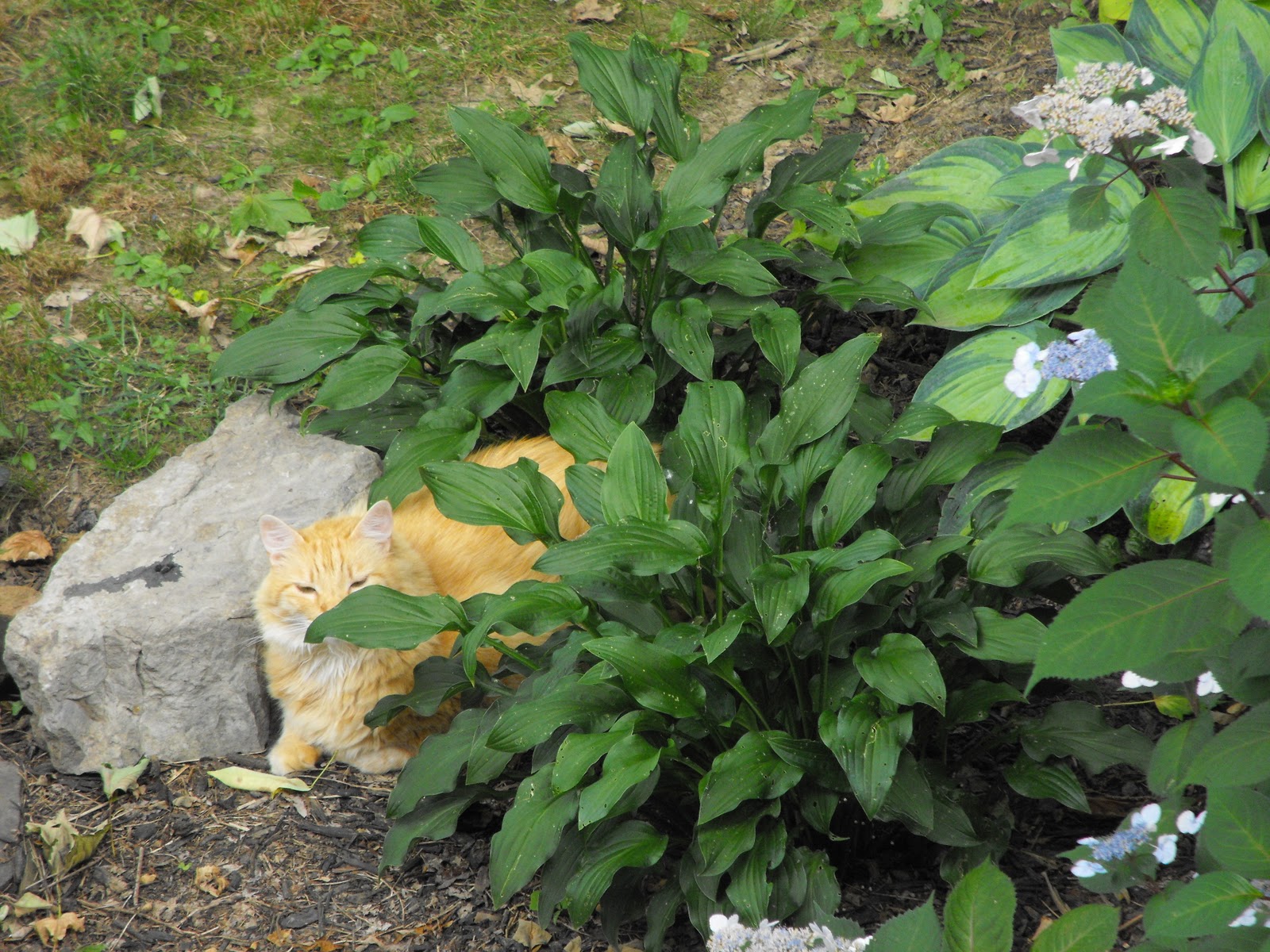
Tuesday, November 9, 2010

The Great Escape

One obituary stood out in today’s New York Times. The first paragraph reads:

“Michael Seifert had settled into a quiet retirement in Vancouver, British Columbia, living in a little white stucco house, gardening in the backyard. A former lumber mill worker, he had a seemingly pristine, if prosaic, background.”

I do not make a habit of reading the NYT obituary section, as if it were equable with the “International” or “N.Y. Region” sections. But something stood out about this particular obituary, as most obituaries in the New York Times do. These are not commemorations or, more aptly described, summaries of a life lived by the local grocer (however important the local grocer’s life may assume in our own quotidian lives), but notices of the deaths of more public, notable, renowned, and sometimes infamous personages.

Seifert’s obituary ranks among that last category.

Michael Seifert had a secret life, a life of the past that I force myself to believe he must have lived a thousand times over in the days that followed, though I know I am wrong. Seifert—I just cannot bring myself to use the designation “Mr.” before his surname—distinguished himself early in life by raping, torturing, and murdering in the northern Italian town of Bolzano where the Nazis erected a concentration camp which served as a labor camp for some, and a brief stop on the way to Auschwitz for others.

Seifert, a.k.a. Misha, “The Beast of Bolzano,” must have engaged in a whole lot of rape, torture, and murder to have earned that nickname, though the obituary notes he was “only” convicted in absentia by a military tribunal in Verona for 9 murders. Nine murders too many, though the über-rationalist amongst us may weigh 9 murders against 6 million and issue a shrug of the shoulders as if that accounting indicates something important, something exonerating at worst or mitigating at best. {If it interests the reader, the NYT briefly recounts how he murdered a pregnant woman, a woman, and a boy; there seems nothing “ordinary” about his methods, that is, no mere bullet to the head eradicated those three lives but acts much more…intrusive.} That trial in 2000 eventually led to extradition proceedings between Italy and Canada, which he lost in 2008. Seifert was subsequently shipped to an Italian military prison at the age of 83. There, he died at the age of 86.

The obituary’s author no doubt carefully selected his prose to introduce his subject and establish a tone of ordinariness, though the reader cannot ignore the screaming headline, “SS Guard at Camp in Italy” dies. Hannah Arendt very famously tried to dispel the notion that mass bureaucratic murder—the sort engineered by the Nazis and Soviets, and replicated by myriad others—was a manifestation of pure evil, but rather could be accomplished by “willing executioners” precisely because of the sheer ordinariness of the enterprise, the product of habit, routine, schedules, division of labor, and all of the other trappings of bureaucratic life. Faced with ordinariness, one simply was driven (as she argued with regard to Adolf Eichmann) by thoughtlessness. By definition, habit and routine are not shaped by creativity and self-expression, but rather by a certain mechanization of doing.

Gardening, in contrast, is an exercise of self-expression and creativity, of thoughtfulness and care. Seifert retreated to the garden later in life, but that seems but an extension of another form of self-expression—a decidedly unsocial, nasty, brutish, violent, unforgivable form of self-expression. The garden of his early life was the camp; self-expression came not in the form of design and arrangement, but through torture and invented forms of it (again, read the obituary). Ordinariness restrained him; he could not live according to the dictates of bureaucratic prescription. His self overcame his position.

Seifert apparently yearned for creative (I use the term broadly) outlets, which so awfully was driven by what seems to my non-clinical eyes a particular sexual pathology. The obituary notes he was convicted and imprisoned early in his SS “career” at Bolzano for sexually assaulting a female SS guard. The Nazis abhorred dissention in the ranks—a dissention for which he was punished and incarcerated, but permitted unlimited violence against “the Other.”

I’ve given this Beast of Bolzano too much public space, and so must, my conscience dictates, stop. Yet intellectually I remain arrested by the juxtaposition of ordinariness (“gardening in the backyard”) and the extraordinariness of his crimes (poking out eyes with his fingers); the parallelism in his life between the actual garden, space of life, and the metaphoric garden of death; and the ostensible disconnect between the forms of his self-creative expression.

Tuesday, November 2, 2010

Awaiting the Inevitable

How we experience the inexorable march of time remains variable, hinged on the distinctiveness and particularities of the situation. If anticipation or dread elongate our perception of the passage of time—for our experiences of and in time are tethered precisely to the passage of each moment—then enjoyment abbreviates time. I do not and cannot write that experience itself accelerates our perception of the passage of time, as inclined as we may be to believe it. For the bedside experience of listening to a loved one’s labored breathing as death gradually and inextricably claims a life prolongs our perception of time, the same way that the hours between death and burial assert their presence in painfully slow motion, even if our memories of those hours become compressed (usually as a blur) over time.
 
Autumn, the calendar tells us, is coeval with spring, summer, and winter. Yet the heat of summer and the frigidities of winter partially devour autumn, thus leaving precious little time for the moderating pleasures that it offers between its bookend extremities. Winter’s palpable wrestling with autumn comes in the form of cooler nights, the precipitous decline in daytime average highs, and the now omnipresent threat of frost in northern Delaware. Many of the surrounding areas have experienced at least 1 if not 3 frosts, but my neighborhood has not. Urban gardens remain protected; the still green canopy of my Norwegian maple shelters the shade garden below, while the radiating heat from the pavements and bricks exude even a marginal warmth that stays the hand of frost, and offers respite to the front sun garden.
 
But the 30.7 degrees this morning nearly claimed the life of Pineapple Sage, which I decided to commit to the passing of the season. Its ruby red tubular flowers mock its impending death, but also seem a parody of themselves. And the threat of frost—the warnings, the watches—continues to haunt.

My perception is that time has decelerated these last few days as I await the inevitable death of the 2010 garden and the close of the active gardening season. The dahlias appear more robust each day, and I find myself glancing longingly at them. The chrysanthemums cheerily embrace their fate; we can always count on the Asteraceaes to uplift in the only way they know how: vaingloriously.
 
 
But the frost, too, shall be fleeting, for the sun melts that crystalline splendor, and then the "long" winter really sets in…


Sunday, October 31, 2010

Halloween: Night of the Unexpected


An electrical line runs diagonally across my property, powering the house next door. It aerially bisects my stone patio, and thus offers an indispensable clue as to the origins of the errant trio of unusually colored chrysanthemums—coral, lavender, and melon—that appeared just below between rocks. A bird, perching on the wire after a delectable feast, deposited its waste, and voila! A veritable visual treat, an imagined aural amusement, a string trio in C minor—the key of heroic struggle.

I haven’t the heart to silence that little trio, but will, next spring (should they survive the winter) transplant them to more appropriate places in the garden.

My intended action comes as an assault on the unintentional, which is what gardening is (try though many gardeners do to produce a verifiable naturalism). And that is why, I think, we should delight in the chance occurrences in the garden.

So imagine my surprise each day when I spy a new arrangement, another appearance of that quintessential Halloween accoutrement: the pumpkin.

This pumpkin, however, did not sprout from a seed—at least not the kind that one plants in the ground(!).  Very much like the untied statues of Daedalus, this pumpkin moves about.

Our pumpkin, of course, could never be tethered. He, like the seeds of the chrysanthemum, appears where he must, and flourishes where he will. We wouldn’t have it any other way.

Happy Halloween!

Friday, October 29, 2010

Adult Pleasures V: Lust

“In chaste hearts uninfluenced by the power
of outward change, there blooms a deathless flower.”

--Michelangelo Buonarroti (1475-1564)

We associate New York with many things: the arts, the avant garde, chic boutiques, Broadway, Fifth Avenue, food, gridlock, Macy’s Thanksgiving Day Parade, overcrowding, publishing, skyscrapers, space (or lack thereof), the Twin Towers, Wall Street, wealth, the United Nations, and ever so much more. Lust perhaps belongs on that list, too, though lust and sexual desires more generally may have had a more prominent showing on this list of associations before Koch and Giuliani’s crusade to clean up Times Square and replace the local “Debbie Does Dallas” retinue with Disney.

Lust: Christians condemn it (Aquinas called it a ‘deformity’, ‘pollution'), Buddhists banish it (any form of desire is the root of suffering), and Hindus decree it a gate to Naraka or hell.

To us moderns, however, lust assumes a less evocative, less lasciviousness meaning, and a simple search will yield it as a synonym for intense desire, craving, or longing. But, owing to the stigma of its antecedents, even the modern incarnations invariably speak to carnal urges.

And so on a recent day trip to New York, that city’s sin seared into my consciousness, a peculiar rapaciousness overtook me from the depths of my being. I began to lust.

Yes. It began as an inadvertent meeting—as all such romances seem to do. I sauntered into the La Guardia Corner Community Gardens (the southwest corner of LaGuardia and West 3rd) on a lovely Sunday in September, and there he was: a very fine specimen of Japanese masculinity. I gasped quite audibly—so loudly in fact that the woman in several feet in front of me turned and said, “Oh yes, he’s a beauty.”

And then it hit me--or rather he hit me. I lost what felt like my consciousness, and impulsively dropped to my knees to partake in whatever sensory experiences he might permit. And that same woman purred, with a sly smile across her face, “Yes, he has that effect.”

One needs to do that with Tricyrtis formosana ‘Samurai’ toad lily because the flowers come only in miniature. One really must plant them along the garden path, for even two feet from the path they become lost.

And what sparkle he brings to the autumn shade garden; what dazzling display of foliage (reminiscent, I think, of Solomon’s Seal or Disporum flavens Asian Fairy Bells)! He tempts; he performs; he elevates the mood as you stare deeply into his flowers and focus on his chenille-like stigma and contemplate his existence whilst rubbing your fingers along his slightly hairy stems. The whole experience arouses and one cannot help but feel lust surging deep from within, pulsating and running its course through your veins.   

Obviously, I am not alone: Michelangelo, strange New York City woman, me, and countless others I presume.

Lust has without doubt been a subtext throughout this blog, and indeed I am convinced that the backbone of any good garden and gardener owes to substantial doses of lust.

Lust in gardening does not share with human romantic or sexual lust. If the adage "you may look as long as you don't touch" applies in the realm of the latter, it most certainly does not apply in the realm of the former. The gardener can lust and touch and obtain and caress as much as s/he desires.

I now search for Toad Lily, my appetite insatiable, my desires as yet unfulfilled. And so I look forward to reporting to you, my dear reader, to Viet, and most importantly to myself that I have “bought myself a little happy,” mortgage notwithstanding.

Wednesday, October 27, 2010

There are mistakes, and there are Mistakes


What’s wrong with this picture?

Anyone?

Yes, I see it too.

The white chrysanthemum draws too much attention to itself; it is the gardening equivalent of rusted pickup trucks on the front lawn. Okay, I exaggerate. But true, it does announce itself with excessive aplomb. It fails to relate to or converse with any part of the garden, or with the surrounding environs (unlike the white chrysanthemum in the front garden, engaged as it were in an intimate tête-à-tête with the Variegated Siberian Iris and harvest gold mum). My harsher critic will enthusiastically add that the others do not engage as well. While I grant the criticism of the placement of the white chrysanthemum, I defend my choices with regard to those others: there is a conversation between the burgundy and harvest gold chrysanthemums and the wider autumn landscape. Even if their hues are the vocal equivalent of a scream, they do speak the vernacular of this week’s peak foliage.

Some would no doubt call that white mum a mistake, and certainly my harsh inner critic (ask my students; that critic is alive and well) has already chastised me. But in gardening, there are few mistakes. Honestly. Really. And I do not write that as thinly veiled self-defense.

Take for instance an article in Real Simple which featured an article on avoiding its readers’ “top 10 gardening mistakes.” The list includes: (1) planting a garden in “the wrong spot” (the article failed to convey a proper meaning of this; it seems the problem addressed in the article was a drainage one, not a ‘gardening in a wrong spot’ issue); (2) accidentally pulling flowers instead of weeds (RS’s solution—GASP—use the nursery tags to identify plants...so cliche and utterly tacky); (3) not preparing the soil (RS’s solution: add organic compost); (4) over-watering (yes, a mistake, but an easily remedied one); (5) planting an invasive variety (my solution: rip it out if it bothers you); (6) not taking wildlife into account (RS’s solution: install a fence and keep wildlife out; no mention was made of planting bulbs—a delicacy for squirrels and other rodents—deeper, which actually has the effect of prolonging the life of the bulb); (7) not giving plants enough sun (the focus is completely improper on this one, as if the gardener has any control on how much sun a plant receives; the gardener’s job is to plant the appropriate plant in a given spot—and thus to do some research prior to embarking on a gardening venture); (8) spreading too many seeds (again, rip out the excess); (9) using too much pesticide (here, the article gives useful advice: use a mixture of hot water and vinegar instead of deploying chemical weapons); and, finally, (10) planting too close together which, on my view, is the root of #8 and perhaps even of #5, and is definitely a Mistake (with a capital M, and not a mistake of the pedestrian sort like all of these others).

To be fair, drainage and soil quality are critical to the gardening enterprise, and deserve attention—much more than the article gave them. But the other bits relate to common sense, which seems very much in short supply these days. We want answers, and we want them now. There is no problem necessarily in that. But, at the risk of offense, I do see a problem in not thinking. There is a reason why nurseries place those little plastic identity tags in pots: NOT so you can use them in the garden itself (you can, but you run the risk of being scoffed and laughed at behind your back by all those neighbors), but to discern plant needs with respect to sun, soil, moisture, and spacing, as well as bloom time. Taking 45 seconds to read the plastic tag will eliminate all of the problems with the possible exception of #6 (some of those little plastic diddies will actually note “deer resistant”).

See? There are few mistakes in gardening. Just as we can rely on those plastic tags, I can move my white chrysanthemum; mistakes, schmistakes.

But there are Mistakes, and mistake #10 gets at what I mean. I identify two. The first involves planting trees and shrubs too close together or to houses and other structures. I do not include most other plants in this brief list, because moving them is an easy affair. This Mistake only becomes apparent after the plants are too large to move, and after the only remedy involves use of a hacksaw or a bulldozer.

Curiously, the first Mistake is actually driven by the second: failing to realistically plan.

True, we are overcome with fantasy and lust, desire and urges. We actually do plan, but our plan is a figment of a conceptual imagination gone awry. We envision garden rooms differentiated by live-walls of boxwood or shrubs; we envision a lush, mature garden. And then we act on the image by planting the architectural core plants too close together, or too close to the house, because the space between young plants is unseemly, unbecoming, nay, amateurish. We seek to hasten our future images not with a dose of realism but with the immediacy of delusion. We fail, in short, to account for overcrowding, diminished sunshine as a result of overcrowding, foliage damage, damage caused by roots, and the like.

These are real Mistakes: real because they are almost irremediable. 

The others: well…those are mistakes of the garden variety, so to speak.

Saturday, October 23, 2010

“A Thoughtful Garden”

For 40 years, Robin Lane Fox has graced the pages of The Financial Times with his weekly, witty garden column. And “graced” is an apt expression—for he was hired by the irascible editor precisely to enliven the hitherto aseptic Wednesday edition of the FT.

In honor of those 40 years, Fox takes us on a rare tour of his Oxfordshire garden—and with it offers us a dazzling display not simply of color and texture, but of erudition and sardonic wit. This tour is unlike any other you may have experienced: Helen of Troy; a badger’s feast of Prozac and peanut butter; a biographical sketch of FT’s tyrannical editor—all (and more) make an appearance! This really is a must-see, and you can access it here.

Fox has also assembled and rewritten many of those columns in a book entitled Thoughtful Gardening. The American edition has not yet been released, but my dear reader must already have deduced that I am submitting an advance order.

In 2009, I began a series of entries in my journal devoted to particular plants in my garden—entries that I thought I’d share during the wintertime when life in the garden takes its hiatus. In the spirit of Fox, I offer here a profile of Tanacetum parthenium (a.k.a. Feverfew or Bachelor’s Buttons).

“Feverfew: its compact clusters of bright white flowers with a center crown of yellow remind of daisies; its leaf shape, citrus scented, evokes chrysanthemum (of course; they belong to the same Asteraceae family). Feverfew appeared in the garden last year [2008]—I did not plant it—next to the Boxwood, and did well, but remained fairly compact. This year [2009]—well, it blossomed in the company of others; it is now of gigantic proportions, well over two feet in height, and I had to stake it yesterday. Feverfew is native to Eurasia (specifically the Balkan, Anatolia, and Caucus regions) and has been used to treat fevers, headaches, and arthritis, hence its common name derivation from the Latin febrifugia (meaning “acting to reduce or cure fever”), itself a compound of febris (fever) and the verb fugare (put to flight, chase away).
 
Tanacetum, the Latin for immortality, might give more than a clue as to its designation as “an obnoxious weed,” for its invasive tendency must be countered with the utmost vigilance. But Tanacetum derives etymologically from the Latin for death, Thanatos. The Greeks and Romans associated the plant with the underworld, for the plant either mimics the smell of a corpse or masks the smell of a corpse—the literature prevaricates on this one (though I must come down on the side of the latter for no corpse I’ve smelled reeks of citrus). Parthenium owes to a tale told by Plutarch about a mason worker who fell from the roof of the Parthenon as it was being built, and who was treated with this particular plant, at the time called the Virgin’s Plant, or Partheneum [note to self: Athena, for whom the Parthenon was erected, might be history’s first, most famous virgin].

So here we have in this one, not-so-little plant the confluence of opposition: Tanacetum parthenium, one name signifying immortality, the other on death. Surely, we must dub this “Hegel’s gal,” for in it we find the perfect dialectic, the use of Feverfew a perfect synthesis: medicinal herbs, medicine, and the art of tending and caring bind life and death into a coherent whole. A plant with so much mythology simply deserves, no matter how obnoxiously invasive it is, to be grown in the garden.”

Friday, October 22, 2010

The F-Word

That word, a phenomenon so horrendous we gardeners dare not speak its name.

Yes, the F-word.

No, not that one. The other one.

Frost.


Frost is in the northern Delaware forecast this evening. But part of me is not convinced. This has happened previously (of course), though not yet this season: a condemning forecast, yet city gardens remain protected (often until rather late in the season) while surrounding gardens, properties, lawns, and suburbs sparkle a brilliant white.

This day, though, seems different. The Hunters Moon, which woke me in the wee hours of the morning, its luminescence peering through thick velvet curtains, seems a chilling caricature of itself. Daytime highs will reach only into the mid 50s, and nighttime lows will plunge into the mid 30s. Frost just feels a possibility

My professional life will occupy me today, leaving very little time when I return to make equally chilling decisions: which lives to save, which lives to allow to pass quietly into the night…
I don’t like these kinds of decisions; I don’t know of any gardeners who do. Yet most gardeners I know also have cultivated a particular kind of resilience, a nonchalance, towards such death. Next year will bring another gardening season and more plants; thus you save those you prefer. Yet I freeze (pun intended?) in the face of my divine like power.

Preferences: contingent on individual taste, and taste is stymieing my decisions. I happen to love my deep yellow lantana which I overwintered last year and which rewarded me this season with spectacular plenitude of foliage and flower. I love the ruby red flowers of my Pineapple Sage, a gift from my friends, the inimitable mother-daughter duo, Jane and Jenn. My patchouli and lemon grass—not exactly Zone 7 plants—have flourished. And what do I do with what I assume to be my Omure yama Matsumurae Japanese maple (under which Simone sits), the pendulous branches of which extend far beyond the pot and occupy significant space? I haven’t room in the house for all of those plants (most of which have become quite large).
This is why I need and want an all-season sunroom.

Until we add this dream to 410 or buy another house with one or space to add one, though, I need to make difficult life or death decisions, and act the Leviathan to my garden.

Sigh.

So, this afternoon in the waning hours of daylight, neighbors shall witness a harried MSW racing to and fro, condemning some plants to death, granting reprieve to others. As I mused in a previous entry, gardening is such morally trying work.
  
And if the frost comes, the neighborhood will be sure to hear me utter that other F-word, the F-word that Rahm Emmanuel made infamously famous.